Methodology
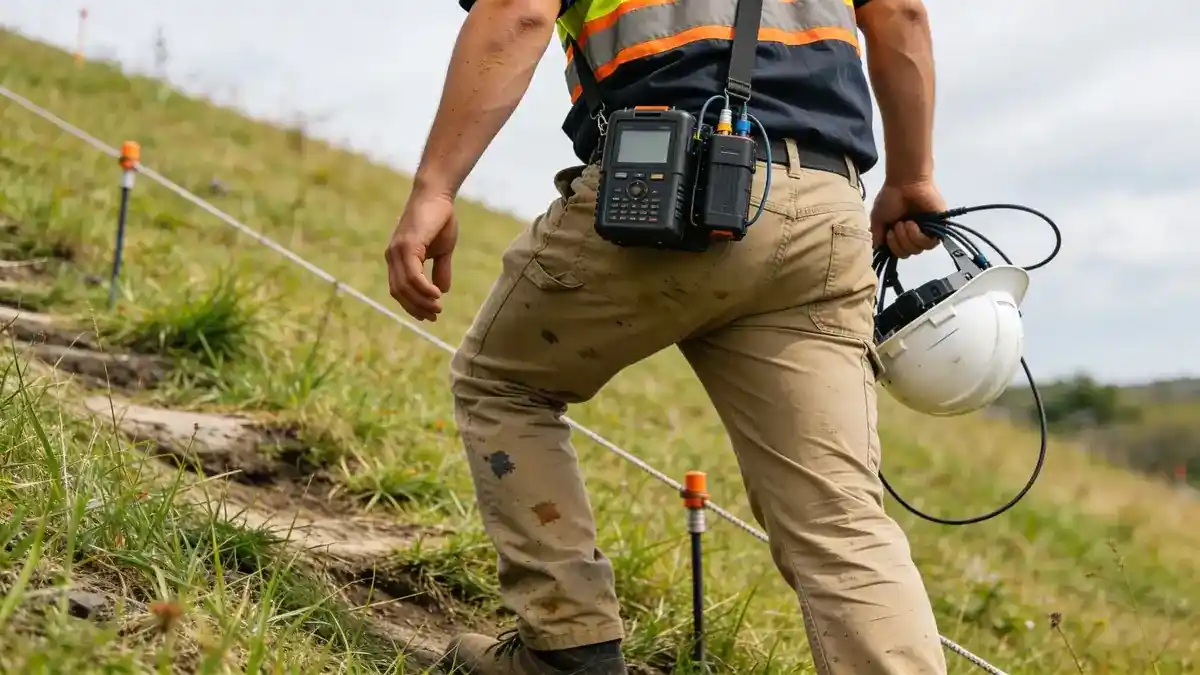
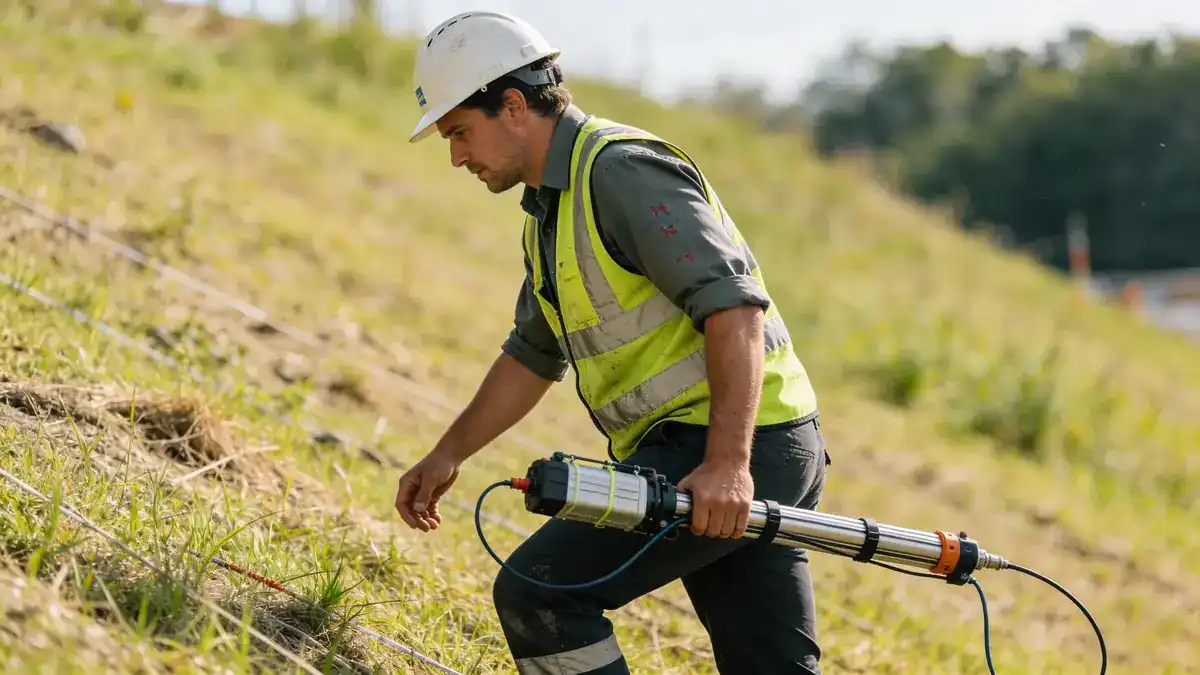
Our methodology begins with a comprehensive site investigation, including boreholes and field testing such as standard penetration tests (SPT) per ASTM D1586. We characterize soil and rock strata, measure groundwater conditions, and collect undisturbed samples for laboratory testing. Stability analyses are performed using limit equilibrium and finite element methods, considering both static and seismic loading per New Zealand standards. For example, we routinely model slopes with safety factors of 1.5 (static) and 1.1 (seismic). Our team integrates SPT Boring data and Soil Mechanics Laboratory results to calibrate strength parameters. The final design includes recommendations for drainage, retaining structures, or ground improvement to achieve long-term stability.
Reference Technical Parameters
| Parameter | Reference Value |
|---|---|
| Soil Strength (c') | 0–50 kPa |
| Friction Angle (φ') | 20°–40° |
| Target Factor of Safety (Static) | 1.5 |
| Target Factor of Safety (Seismic) | 1.1 |
| Maximum Slope Height | Up to 100 m |
Local Considerations — New Zealand
New Zealand's diverse geology—from the soft sediments of Hamilton to the loess slopes of Dunedin—requires region-specific slope stability approaches. In Christchurch, the 2010–2011 earthquakes triggered widespread landslides, highlighting the need for seismic slope assessment. In Wellington, steep terrain and high rainfall demand robust drainage design. Our firm adapts each analysis to local conditions, incorporating regional seismic hazard data and soil profiles. We have completed projects in Auckland, Blenheim, Christchurch, Dunedin, Gisborne, Hamilton, Hastings, Invercargill, Napier, Nelson, New Plymouth, Palmerston North, Porirua, Pukekohe, Rotorua, Tauranga, Upper Hutt, Wellington, Whanganui, and Whangarei. For example, in Blenheim, we addressed slope failures in alluvial fans using deep drainage and soil nailing.
Request a Quote
Our team reviews your project and issues an initial report at no cost.
Or write us directly at [email protected]
Applicable Standards
- AS/NZS 1170.0:2002 Structural design actions – General principles
- NZS 1170.5:2004 Structural design actions – Earthquake actions
- NZS 4404:2010 Land development and subdivision infrastructure
- Eurocode 7 (EN 1997-1) – Geotechnical design
Frequently Asked Questions
What methods are used for slope stability analysis in New Zealand?
We use limit equilibrium methods (e.g., Bishop, Janbu) and finite element analysis (e.g., Plaxis). Field data from boreholes and laboratory tests on soil strength parameters are incorporated. Seismic loading follows NZS 1170.5.
How deep are boreholes typically drilled for slope stability studies?
Borehole depths range from 10 m to 60 m, depending on slope height and geology. In soft ground, deeper borings may be needed to reach competent strata. Our team follows ASTM D1586 for standard penetration testing.
How long does a typical slope stability assessment take?
A standard assessment takes 4 to 8 weeks, including site investigation, laboratory testing, analysis, and reporting. Complex projects with deep borings or seismic analysis may require longer. We prioritize projects based on urgency.
How much does slope stability analysis cost in New Zealand?
Costs typically range from $2,100 to $7,000, depending on slope height, site accessibility, number of borings, and required laboratory tests. This range is a 2026 reference; we recommend requesting a tailored quote for your project.