
Methodology
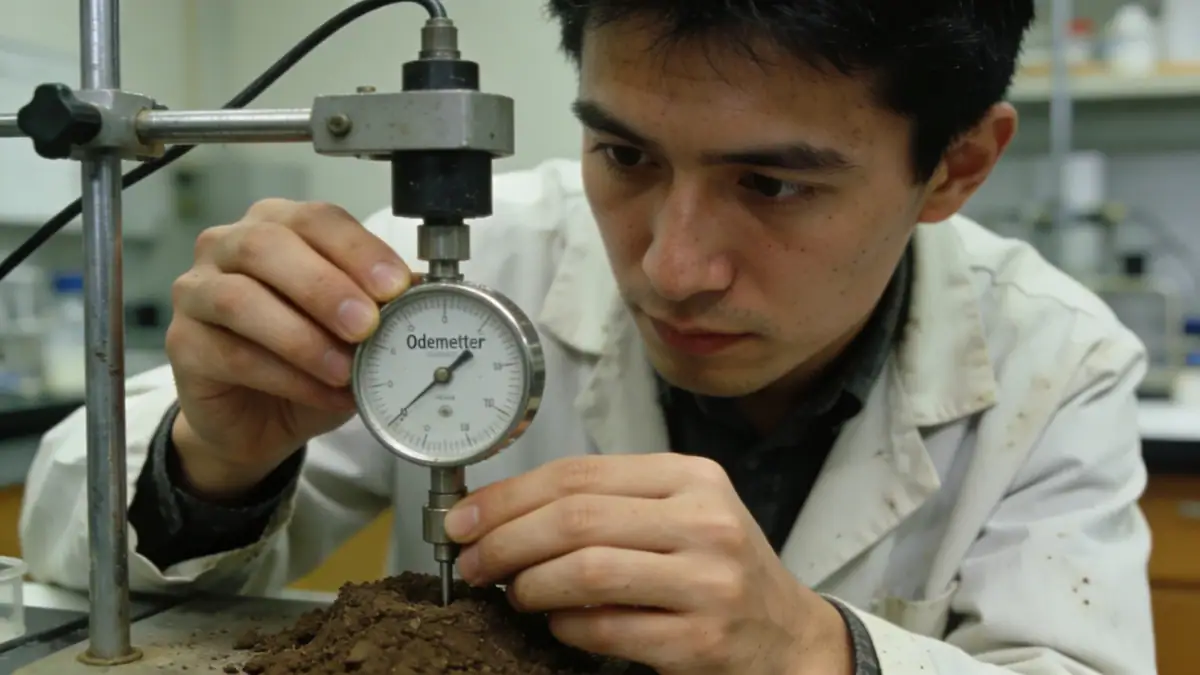
Our methodology adheres to ASTM D1586 for Standard Penetration Tests and NZS 4404:2010 for geotechnical site investigations. Samples are retrieved via thin-walled Shelby tubes or split-barrel samplers, then sealed and transported to our laboratory under controlled conditions. Testing includes classification (moisture content, Atterberg limits, particle size distribution), strength (unconfined compression, direct shear, triaxial at confining pressures up to 2.0 MPa), and consolidation (one-dimensional oedometer tests). Our technicians log each test with precision, and results are cross-referenced against regional databases. For deeper insights into field sampling, refer to our SPT Boring service page.
Reference Technical Parameters
| Parameter | Reference Value |
|---|---|
| Moisture Content (ASTM D2216) | 0.5% – 45% |
| Liquid Limit (ASTM D4318) | 20 – 80 |
| Unconfined Compressive Strength (ASTM D2166) | 50 – 400 kPa |
| Friction Angle (Triaxial CU, ASTM D4767) | 25° – 45° |
| Coefficient of Consolidation (cv) (ASTM D2435) | 0.1 – 5.0 m²/year |
Local Considerations — New Zealand
New Zealand's tectonic setting imposes variable demands on soil testing. In Christchurch, the 2010–2011 Canterbury earthquake sequence highlighted the need for cyclic strength assessments of liquefiable sands. Our laboratory tailors testing protocols to each region: for instance, in Wellington, we emphasize shear wave velocity correlations and high-pressure triaxial tests on deep marine sediments. In Auckland, where residual volcanic soils dominate, we focus on unsaturated soil mechanics and collapse potential. Our team regularly collaborates with local geologists in Gisborne and Hastings to address loess-derived silt behavior. This adaptive approach ensures that every project benefits from context-specific analysis. Learn more about our regional work on our Christchurch page.
Request a Quote
Our team reviews your project and issues an initial report at no cost.
Or write us directly at [email protected]
Applicable Standards
- ASTM D1586 – Standard Penetration Test (SPT)
- NZS 4404:2010 – Geotechnical Site Investigations
- Eurocode 7 (EN 1997-1) – Geotechnical Design
- NZS 1170.5 – Earthquake Actions (site subsoil classification)
Frequently Asked Questions
What is the typical turnaround time for standard soil classification tests?
For a standard suite including moisture content, Atterberg limits, and particle size distribution, our laboratory delivers results within 5 to 7 working days from sample receipt. More complex tests, such as consolidated drained triaxial, may require 2 to 3 weeks.
Does your laboratory hold IANZ accreditation?
Yes, our laboratory operates under a quality management system aligned with ISO/IEC 17025, and we hold International Accreditation New Zealand (IANZ) endorsement for specific test methods. We are also audited annually to maintain compliance with NZS 4404.
How do you ensure sample preservation during transport from remote sites?
Samples are immediately sealed in moisture-proof containers, stored in insulated coolers at 4°C, and shipped via courier with temperature loggers. For long-distance transport from cities like Invercargill or Whangarei, we use refrigerated transport to maintain integrity.
How much does Soil Mechanics Laboratory cost in New Zealand?
Pricing depends on test type, sample depth, and site accessibility. A basic classification suite ranges from $5,250 to $8,750 per project (2026 reference). Additional charges apply for advanced triaxial or consolidation testing. We recommend requesting a tailored quote for your specific program.