Methodology

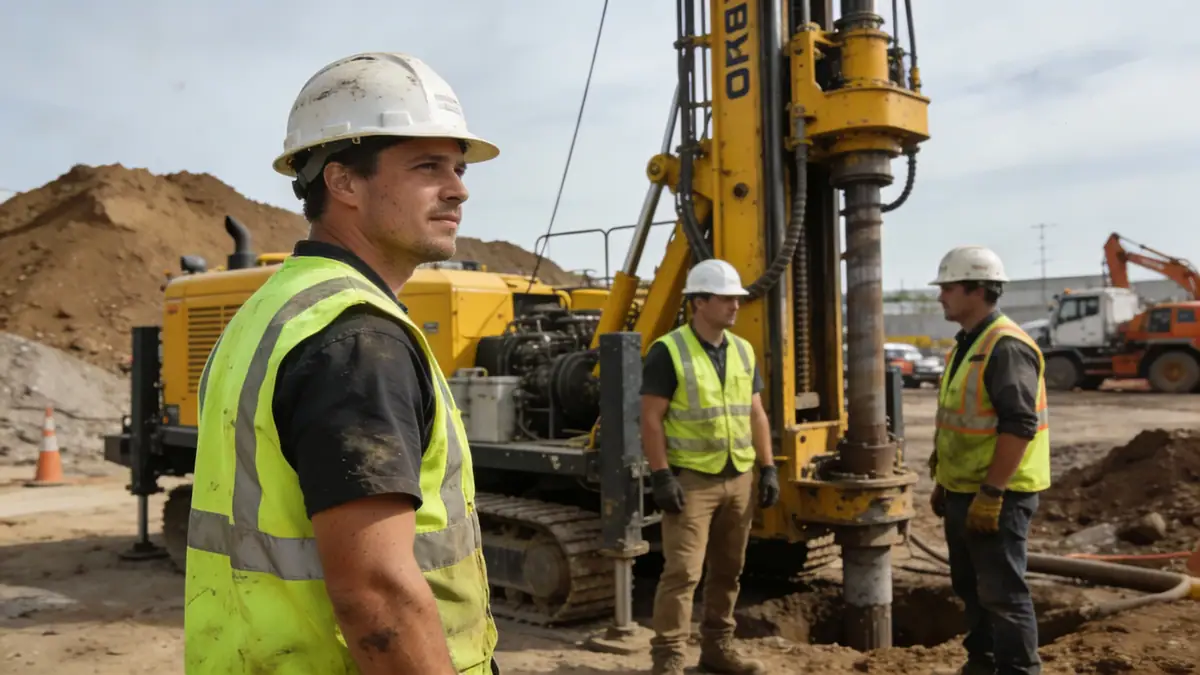
Our approach in Hamilton integrates advanced field and laboratory techniques. We conduct standard penetration tests (SPT) per ASTM D1586, using a 63.5 kg hammer dropped 760 mm, with sampling intervals every 1.0 to 1.5 m. For continuous profiling, we employ cone penetration tests (CPT) with a 10 cm² cone, recording tip resistance and sleeve friction at 2 cm intervals. Our soil mechanics laboratory performs index properties, compaction, and strength tests following New Zealand standards. This systematic methodology ensures reliable data for foundation design and earthworks.
Reference Technical Parameters
| Parameter | Reference Value |
|---|---|
| Predominant soil type | Alluvial silts, sands, and peat |
| Typical groundwater depth | 1.5–3.0 m below ground surface |
| Bedrock depth | Variable, typically >20 m |
| Typical N60 range (SPT) | 5–15 blows/300 mm in shallow soils |
| Maximum seismic acceleration (PGA) | 0.13–0.18 g (NZS 1170.5) |
Local Considerations — Hamilton
Hamilton's subsurface is dominated by Holocene alluvial deposits from the Waikato River, consisting of interbedded silts, sands, and occasional peat layers. Groundwater is typically shallow, between 1.5 and 3.0 m, requiring dewatering considerations for excavations. Seismic hazard is moderate, with peak ground accelerations of 0.13–0.18 g per NZS 1170.5. Eastern suburbs (e.g., Hillcrest) exhibit firmer soils over weathered ignimbrite, while western areas (e.g., Nawton) have deeper soft soils. Our spt boring services are routinely deployed to characterize these variations. Common issues include liquefaction potential in loose sands and settlement of compressible peats, which we address through detailed site investigations.
Request a Quote
Our team reviews your project and issues an initial report at no cost.
Or write us directly at [email protected]
Services in Hamilton
Applicable Standards
- NZS 1170.5 (Structural Design Actions – Earthquake)
- NZS 4404 (Land Development and Subdivision Infrastructure)
- ASTM D1586 (Standard Penetration Test)
- Eurocode 7 (Geotechnical Design – Reference)
Frequently Asked Questions
What are the typical soil conditions in Hamilton?
Hamilton's soils are primarily alluvial silts, sands, and peats deposited by the Waikato River. Groundwater is shallow, often within 1.5–3.0 m of the surface. Peat layers are common in low-lying areas, posing settlement challenges.
Is a geotechnical investigation mandatory for building in Hamilton?
Yes, under the New Zealand Building Code, site-specific geotechnical investigations are required for most structures, especially in areas with variable ground conditions or moderate seismic hazard. Our assessments ensure compliance with NZS 1170.5.
How does seismic risk affect foundation design in Hamilton?
Hamilton is in a moderate seismic zone with PGA up to 0.18 g. Loose alluvial sands may liquefy during strong shaking, requiring ground improvement or deep foundations. Our analyses follow NZS 1170.5 to mitigate these risks.